Black
 Brown
 Gray
 Tortoise
 Clear
 Blue
 Red
 Pink
 Gold
 Aviator
 Cateye
 Oval
 Round
 Square
 Browline
 Rectangle



 Black
 Brown
 Gray
 Silver





Anti-Reflective Coating Glasses vs Blue Light: Which Is Better?
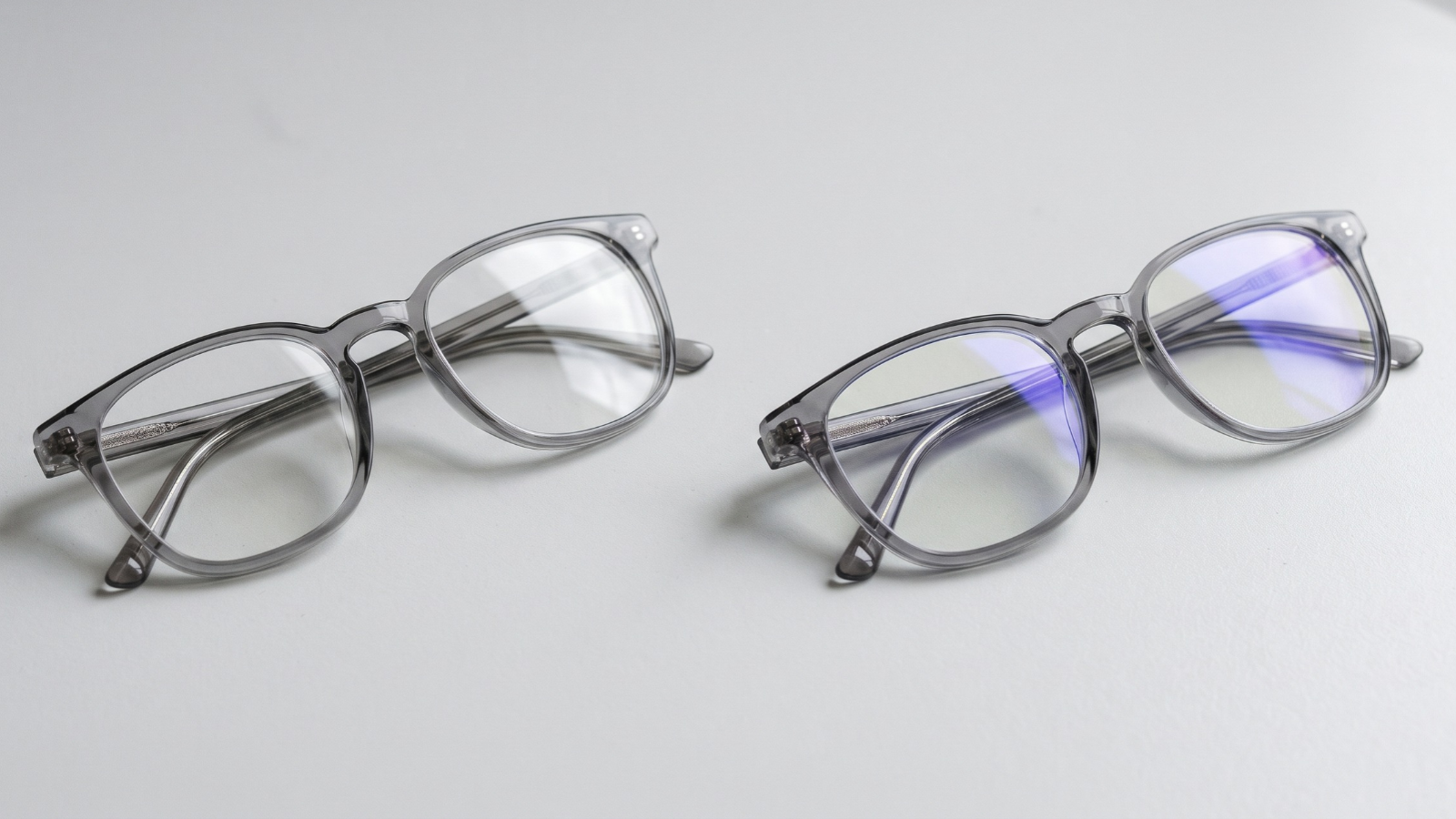
Neither is better, both are designed for a specific purpose. Anti-reflective (AR) and blue-light filtering coatings are two different lens treatments that address different visual concerns. An AR coating is designed to reduce the reflections from the front and back surfaces of spectacle lenses to improve clarity and reduce glare. A blue-light filtering coating reduces certain wavelengths of blue light that pass through the lenses. You can think of it as an AR coating with an added feature and the two features can be added in combination.
Anti-Glare vs. Blue Light Glasses: Key Differences
| Feature | Anti-Reflective(AR) Coating | Blue-Light Filtering AR Coating |
|---|---|---|
| What it is | Lens treatment designed to reduce reflections from the lens surface | Lens that combines an AR with selective blue-light filtering |
| How it works | Multiple thin layers minimize reflected light so more can pass through the lens | AR coatings are specialized to reduce transmission of high-energy blue light and minimize reflections |
| Purpose | Reduce reflections, glare, and light that bounces off lenses | Reduce selected blue wavelengths, reflections, and glare from the lens surface |
| Visual Effect | Lenses appear clearer and without reflections around lights and screens | Same benefits as AR but lenses may have a subtle tint or blue reflection depending upon product |
| Primary Use | Improvement in lens clarity and a reduction in reflections | Improved clarity, reduction in reflections, and the filtering of HEV |
| Used in Combination? | Yes, can be used with a blue-light filtering treatment | Yes, can be used with an AR coating |
How Does Anti-Reflective Coating Work?
Anti-reflective coating or treatment is applied directly to the lens surface using a multi-step process and is not a separate type of lens to be ordered. The process is done in a vacuum chamber for best adherence. An anti-reflective coating works because of the application of multiple extremely thin layers of a specialized material to the surface of the lens. These layers reduce the amount of light that is reflected off the front and back surfaces of the lens. Instead of the light bouncing back toward your eyes or creating reflections, more light passes through the lens, allowing you to see through the lenses. Each applied layer adds an additional sealing property which often includes hydrophobic (water-repellent); oleophobic (oil-repellent); and anti-static (make it more difficult for dust and dirt to stick to your lenses).
The lens is more clear, transparent, and with fewer distracting reflections around bright lights, windows, headlights, and digital screens. AR coatings can improve your appearance behind a camera or screen by making your eyes more visible to other people by reducing the glare reflecting from the lenses. Though an AR coating reduces reflections, it does not filter blue light. A specific type of AR with a blue-light filter coating must be added to selectively reduce the transmission of certain wavelengths of blue light.
How Do Blue Light Filtering Lenses Work?
Blue light filtering lenses reduce the amount of high energy blue light that passes through the lens and reaches the eyes. Depending on the design, they may use a specialized lens material, a tinted treatment, or a coating that selectively absorbs or reflects certain wavelengths of blue light while allowing other visible light to pass through. Some lenses have a subtle yellow tint that filters blue light across a broader range, while others are nearly clear and target a specific range of wavelengths. Blue light filtering lenses also include an anti-reflective coating to reduce glare from screens, overhead lighting, and car lights at night.
Blue light filtering lenses are intended to reduce exposure to select high energy visible light and may make screen viewing more comfortable for some people. However, they do not block all blue light, and their benefits vary depending on the wearer’s visual needs. A 2025 comprehensive literature review found that most computer eye strain may be due to a combination of screen-related factors, along with environmental and ergonomic influences” instead of blue light.
Does Anti-Reflective Coating Block Blue Light?
Not all anti-reflective coatings block blue light, but some may. An anti-reflective coating is added to the lens for the primary purpose of decreasing reflections, enhancing your appearance, and increasing the life of your lens. If you are ordering lenses for your glasses, check with the manufacturer of your lenses to see if that lens combines AR with blue-light filtering properties.
Can You Have Anti-Glare and Blue Light Filtering Together?
Yes, you can order an anti-glare coating with a blue-filtering addition. At Overnight Glasses, we offer both anti glare glasses and prescription blue light glasses, which can be ordered together. Our blue-light filtering lenses include Blue Armor and Blue Diamond, with Blue Diamond offering increased blue blocking at longer wavelengths. All our lenses include an anti-reflective (AR) coating, so only the blue-light filtering addition comes at an extra charge.
Anti-Glare or Blue Light: Which Should You Choose?
If you are trying to decide which one you should choose, consider your daily visual demands and occupational needs. If you are having trouble with glare and halo or at night or off your digital devices, you should order an anti-reflective coating. If your concern is the blue-light emitted from digital devices and would like to see if it improves your eye strain and eye comfort, you should order a blue-light filtering anti-reflective coating. If you desire the best possible combination for your eyes, you should opt for both.
The Bottom Line
Anti-reflective and blue-light filtering coatings are designed for different purposes, so neither is automatically “better” than the other. An AR coating reduces reflections and glare, while a blue-light filtering coating selectively reduces certain wavelengths of high-energy visible light. Your choice depends on your individual visual needs and preferences. If you want the benefits of both, order our lenses that are made with an anti-reflective coating and add a blue-light filtering lens coating.