Black
 Brown
 Gray
 Tortoise
 Clear
 Blue
 Red
 Pink
 Gold
 Aviator
 Cateye
 Oval
 Round
 Square
 Browline
 Rectangle



 Black
 Brown
 Gray
 Silver




Can You Wear Blue Light Glasses Outside?
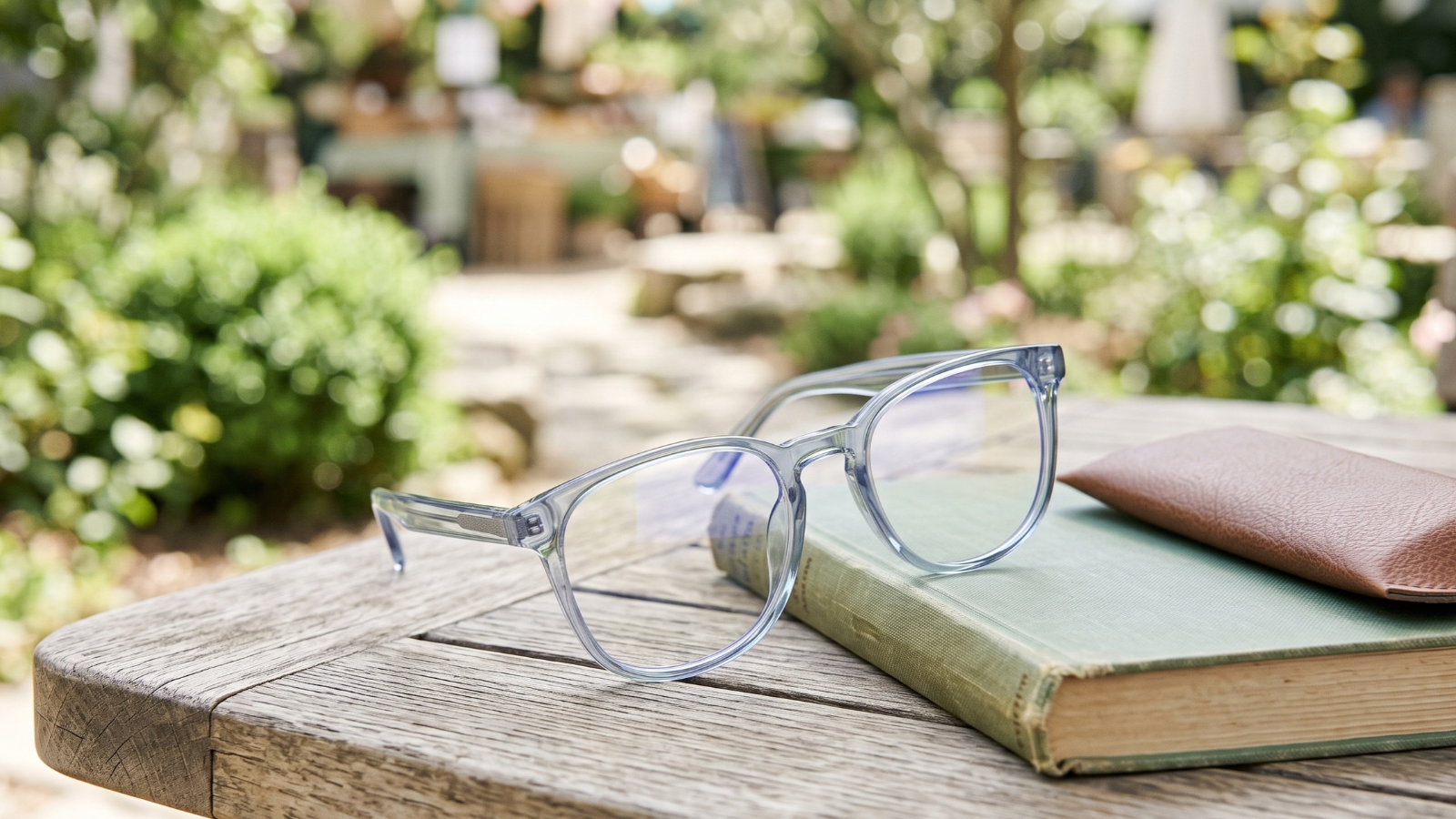
Yes, blue-light glasses are safe to wear outside, but they may not always provide the UV protection needed from the sun. Most blue light glasses do filter UV light, but this depends on the lens material, manufacturer, and applied coatings. Blue light glasses are designed to filter a portion of high-energy visible (HEV) blue-violet light that is emitted by digital screens, LED lighting, and other artificial light sources. The blue-light-filtering anti-reflective coatings minimize glare and improve visual comfort during extended screen use, but they do not reduce the brightness of the sun. We will discuss the benefits of blue light glasses when used outdoors, how they affect your vision and environment, and the key differences between blue light glasses and sunglasses.
Do Blue Light Glasses Protect You From the Sun?
Both prescription and non-prescription blue light glasses can be made from lens materials such as polycarbonate or high-index plastic, which inherently block nearly 100% of UVA and UVB light. Other lens materials may have an additional UV protective coating applied to provide the same level of protection. However, not every pair of blue light glasses automatically includes UV protection, so it's important to ask the manufacturer.
While blue-light glasses can be worn outdoors and provide sun protection, they are not a substitute for sunglasses. While most have UV protection, they do not reduce brightness or shield your eyes from the sun's intense light and glare. For outdoor activities, a quality pair of sunglasses with 100% UVA and UVB protection is essential to shield your eyes from harmful ultraviolet rays and reduce the risk of ocular conditions such as cataracts, photokeratitis, and melanoma.
Will You See Normally Wearing Blue Light Glasses Outside?
In most cases, you will see normally when wearing blue-light glasses outdoors.
Quality, clear blue light prescription glasses from Overnight Glasses provide natural vision and accurate color perception, so most eyeglass wearers do not notice a difference in the way their environment looks. Blue light lenses filter a small portion of blue-violet light, but they do not significantly darken your vision or distort everyday colors. Your vision will remain clear and natural, but your eyes may still be sensitive and uncomfortable in bright conditions because they do not reduce glare or brightness like sunglasses. They may be okay for driving on overcast days or can be ordered with photochromatic lenses for indoor-to-outdoor environments. UV-blocking sunglasses are a better choice for prolonged time outdoors or driving in sunlight.
If you purchase blue light glasses with a yellow or amber tint, your world will take on the color of the lenses. Tinted blue light glasses are geared more towards gamers or those who spend extended time on screens. Though these tinted blue light glasses filter more blue light, they also alter colors. Your eyes may still be more sensitive to the sun’s brightness than when wearing sunglasses, but they may feel more comfortable than with clear blue-light glasses.
Do You Still Need Sunglasses?
Yes, you still need sunglasses. While most blue light glasses offer some protection against UV, they do not reduce the brightness from the sun. They are best for brief periods. If you need a pair of glasses that transitions between indoors and outdoors for running errands, consider adding a photochromatic treatment to your blue-light glasses. Photochromatic lenses darken outdoors when activated by UV light and return to clear after a few minutes indoors. They are convenient for those who prefer not to carry two pairs of glasses.
If you're spending extended time in bright sunlight, sunglasses are the better choice. While blue light glasses may offer UV protection, they do not provide the same level of brightness and glare reduction as sunglasses. Sunglasses block 100% of UVA and UVB rays and reduce the intensity of visible light to reduce squinting and minimize glare from reflective surfaces like roads, water, and snow. Polarized sunglasses are even better for glare reduction and for outdoor activities like boating, fishing, and skiing. They improve contrast and make colors pop! They typically come in both grey and brown colors to easily pair with any sunglass frame.
Many ocular diseases and skin cancers result from UV light exposure. Sunglasses are considered the standard for the best eye and skin protection.
Are Blue Light Glasses Useful If You Work Outside?
If you work or study outdoors with a laptop, tablet, or smartphone, blue-light glasses may still provide benefits by reducing screen reflections and filtering a portion of the blue-violet light emitted by your digital devices. A blue-light-filtering anti-reflective coating can improve your visual comfort during extended screen use when working outdoors; however, blue-light glasses are not designed to reduce the sun's brightness or eliminate glare in outdoor environments.
They will not darken your environment like a pair of sunglasses or photochromatic lenses, and they will not block the intense sunlight that can make screens difficult to see. If you're planning to work outside for long periods, consider wearing prescription sunglasses or photochromic (transition) lenses.
Final Thoughts
Blue light glasses can be a practical choice for everyday wear and short periods of time spent outdoors. Depending upon the lens material and anti-reflective coating, they may have built-in UV protection but will not decrease brightness. Their primary purpose indoors is to reduce a digital device user’s exposure to a portion of blue-violet light and improve visual comfort on digital screens. However, they are not designed to be a substitute for sunglasses. Sunglasses are specifically designed to block 100% of UVA and UVB rays and reduce visible light intensity and glare. They are a much better option for driving on bright days, outdoor sports, beach days, and other extended time outdoors. Most eyeglass wearers need both blue light glasses and a pair of sunglasses for optimal visual comfort.