Black
Black Brown
Brown Gray
Gray Tortoise
 Clear
Clear Blue
Blue  Red
Red Pink
Pink Gold
Gold Aviator
 Cateye
 Oval
Oval Round
Round Square
 Browline
 Rectangle


 Black
Black Brown
Brown Gray
Gray Silver




Can You Wear Blue Light Glasses With Contacts?
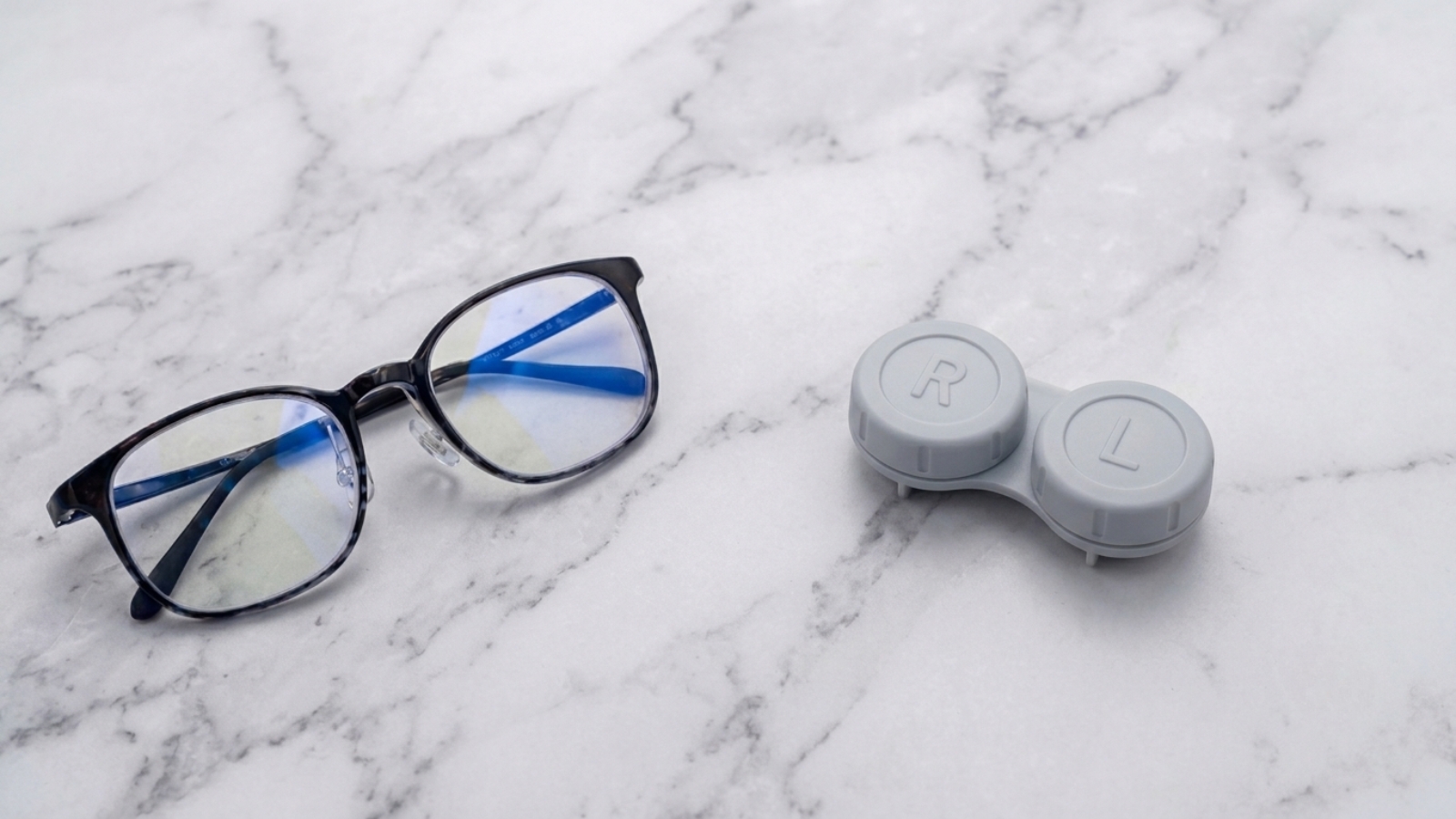
Yes. You can wear blue light glasses with contacts, and many people do. The catch: you need to choose the right type. If your contacts already correct your vision, the blue light glasses you wear over them must be non-prescription.
But if you spend most of your day in front of a screen, there's a better setup. A pair of blue-light prescription glasses replaces both your contacts and a separate pair of blue-light glasses.
Is It Safe to Wear Blue Light Glasses With Contact Lenses?
Yes, it is completely safe. Your contacts sit on the cornea, and your glasses sit on your nose, so they serve different jobs and never interfere with each other. Worn together, they can actually make long screen days more comfortable by easing glare and eye fatigue.
As long as both your contacts and your glasses are properly fitted and used as directed, there are no adverse effects to wearing them at the same time. If you are over 40 and wear distance-only contacts, your eye doctor may suggest adding a small reading correction to your screen glasses for close-up work. Check with your doctor if you get blurry vision at the computer or want to confirm the right near prescription for you.
Which Type You Need Depends on Your Contacts
This is the part that trips people up, so here is the simple breakdown by the kind of contacts you wear.
If You Wear Prescription Contacts
Your contacts already correct your vision, so you only need non-prescription blue-light glasses on top of that. They reduce glare and improve screen comfort without changing your prescription. Do not order prescription glasses for this, or you will double your correction, and everything will look blurry.
If You Wear Non-Prescription Contacts
If your contacts are purely cosmetic, such as colored or costume lenses with no vision correction, you have more freedom. If your eyesight is fine, non-prescription blue light glasses are all you need for screen comfort. If you do have an uncorrected vision need, you can wear prescription blue light glasses instead, since your contacts are not correcting anything for them to clash with. When in doubt, your eye doctor can confirm which is right for you.
Why Contact Lens Wearers Use Blue Light Glasses
Contacts correct your vision. They do nothing about screen glare or eye fatigue. These are the common reasons people add a pair of screen glasses on top.
- Working on a screen all day. Long stretches at a monitor cause glare and visual fatigue. Contacts do not reduce glare; lenses with a quality anti-reflective coating do.
- Late-night phone use. Screen light at night can disrupt your sleep cycle. Some studies suggest filtering it may help, though the evidence is still mixed.
- Eye strain or headaches after screens. Reducing glare and improving contrast can make long screen sessions more comfortable.
- Wearing contacts for many hours. Contacts can dry out during long screen days. A pair of glasses acts as a light barrier against air conditioning, heat, and fans, which may slow how fast your tears evaporate.
Common Problems Contact Wearers Experience With Blue Light Glasses
Though rare, contact lens wearers could experience a problem when wearing blue light glasses. Most are easily corrected by discussing with a professional.
Blurry Vision From Stacked Prescriptions
If you wear prescription contacts and put prescription glasses over them, you double your correction, and everything blurs. Order non-prescription blue-light glasses to wear over contacts unless your doctor specifically recommended a near correction.
Double Reflections on Low-Quality AR Lenses
A double reflection is the faint appearance of two images instead of one when light hits the lens. It happens because cheaper anti-reflective (AR) coatings reduce reflections but do not eliminate them, so light bounces off both the front and back of the lens and creates a subtle ghosting effect. A high-quality AR coating minimizes this and gives you clearer vision.
Screens Making Dry Eyes Worse
Many contact wearers already deal with some dryness. Staring at a screen makes it worse because your blink rate drops, your tear film breaks up faster, and you may experience irritation, burning, or a gritty sensation. Glasses will not fix this on their own, but shielding your eyes from moving air helps.
Glasses Rx vs Contact Rx Mix-Ups at Checkout
Your glasses prescription and your contact lens prescription are two different things. A common mistake is entering the wrong one. When ordering glasses, use your glasses prescription and double-check that the numbers are entered correctly, including sphere, cylinder, and axis.
Choosing Non-Prescription When You Actually Need a Prescription
A lot of screen strain comes from small uncorrected refractive errors, including mild astigmatism. If plain blue light glasses are not helping, a small prescription may be what you actually need. An eye exam will tell you.
Why Prescription Blue Light Glasses Are the Smarter Choice
For some, prescription glasses with a blue-light-filtering anti-reflective coating may be a better choice than wearing contact lenses and a separate pair of blue-light glasses. Instead of combining contact lenses and an extra pair of glasses, a single pair of prescription lenses can correct your vision and reduce screen-related glare at the same time. This option is usually more cost-effective and more convenient, especially for remote workers. Unlike contact lenses, glasses do not exacerbate dry eyes since they don’t sit directly on the eye, which may be beneficial during long periods of screen time.
A Realistic Daily Routine
Prescription blue light glasses can save you both time and money. Contacts are an ongoing expense, and switching to glasses can save you hundreds of dollars a year. They also simplify your mornings: no daily cleaning, no storage case, no fiddling to get a lens in when you are already running late. For anyone who works from home or does not need contacts for sports, a good pair of screen glasses is often the easier daily choice.
At Overnight Glasses, our Blue Armor lenses are built for exactly this. The blue light filtering is embedded in the lens, so it will not wear off the way a surface coating can, and independent testing confirms effective filtering at 455nm, the wavelength where screens emit the most strain-causing light. Every office lens package also includes anti-glare, scratch resistance, easy-clean coating, and 100% UV protection at no extra cost. And you can have a new pair as soon as the next day, rather than waiting 1 to 2 weeks.
Blue Light Prescription Glasses vs. Blue Light Contacts
| Feature | Blue Light Glasses | Blue Light Contact Lenses |
|---|---|---|
| How They Work | Blue light is filtered through the anti-glare coating on the eyeglass lenses | Blue light is filtered by the contact lens material worn directly on the cornea |
| Prescription Vs. Non-Prescription | Available in Both | Available with a Prescription |
| Convenience | Ease of Use | Requires insertion, removal, and cleaning routine |
| Comfort | Comfort depends on frame and fit | Comfortable for most, but may exacerbate dry eye |
| Dry Eye | Does not contribute to dry eye | May cause or increase dryness, especially with long hours of use |
| Cost | One time purchase, but varies by frame and lens needs | Ongoing costs, replacements, and solutions |
| Ideal Candidate | Remote employees, those who desire convenience | Those who don’t like to wear glasses, work out, or participate in sports |
Final Thoughts
Wearing non-prescription blue-light glasses over your contacts can make long screen days more comfortable, mostly by reducing glare and shielding your eyes from the drying effects of airflow. If you are on screens most of the day, a single pair of prescription blue-light glasses may be the simpler, cheaper, and more comfortable choice, and you can get them quickly without sacrificing lens quality.