Black
Black Brown
Brown Gray
Gray Tortoise
 Clear
Clear Blue
Blue  Red
Red Pink
Pink Gold
Gold Aviator
 Cateye
 Oval
Oval Round
Round Square
 Browline
 Rectangle
 Black
Black Brown
Brown Gray
Gray Silver



How to Tell if Glasses Are Fake: 7 Signs to Spot Counterfeit Eyewear
Counterfeit eyewear has flooded the market, making it increasingly difficult to distinguish authentic designer glasses from convincing replicas. Whether someone's shopping for prescription frames or stylish sunglasses, they need to know what they're really buying.
Fake glasses aren't just about lost money on inferior products. They often lack proper UV protection and quality materials, which can affect eye health and comfort. Plus, counterfeit frames typically break more easily and won't last as long as genuine products.
Learning to spot fake glasses protects buyers from scams and ensures they're getting the quality they're paying for. From examining logos and checking serial numbers to evaluating build quality and packaging, there are several telltale signs that reveal whether glasses are authentic or counterfeit.
Common Signs of Fake Glasses
Counterfeit eyewear exhibits distinct characteristics that differentiate it from authentic designer glasses. Consumers can identify fake glasses by examining specific physical attributes and pricing inconsistencies.
1. Poor Build Quality and Materials
Fake glasses typically feature substandard construction materials that compromise durability and comfort. Authentic designer frames use high-grade acetate, titanium, or stainless steel, while counterfeits often substitute these with cheap plastic or low-quality metal alloys. The weight distribution in fake glasses feels uneven, causing discomfort during extended wear.
Key indicators of poor build quality include:
- Rough edges on frame surfaces and temple tips
- Uneven paint application with visible brush strokes or bubbles
- Loose hinges that wobble or squeak when opening
- Flimsy nose pads made from hard plastic instead of silicone
- Brittle frame material that bends or cracks under minimal pressure
2. Inconsistent Logo Placement
Brand logos on fake glasses often display noticeable irregularities in positioning, size, and execution. Luxury eyewear brands maintain strict standards for logo placement, ensuring consistency across all products.
| Logo Element | Authentic Glasses | Fake Glasses |
|---|---|---|
| Position | Precisely aligned on temples | Off-center or tilted |
| Font | Crisp, clear lettering | Blurry or distorted text |
| Depth | Evenly engraved or embossed | Shallow or uneven impressions |
| Color | Consistent metallic finish | Fading or peeling paint |
| Size | Proportional to frame design | Too large or small |
Authentic designer glasses feature laser-etched or professionally embossed logos that maintain clarity even under magnification. Counterfeit logos appear printed on the surface, peeling off after minimal use. The spacing between letters in fake logos often varies, and special characters like registered trademark symbols (®) may be missing or incorrectly sized.
3. Suspiciously Low Prices
Fake glasses sell at prices significantly below retail value, typically 70-90% less than authentic versions. Designer eyewear from brands like Ray-Ban, Gucci, or Prada retail between $150-$500, while counterfeits sell for $20-$50.
Red flags in pricing include:
- Unauthorized sellers offering "wholesale" prices to individual consumers
- Limited-time deals claiming 80% discounts on current season styles
- Bulk discounts for single pairs of glasses
- Cash-only transactions with no return policy
- Prices below manufacturing costs for premium materials
Authorized retailers maintain consistent pricing across platforms, offering modest discounts of 10-30% during legitimate sales events. Online marketplaces selling designer glasses at extreme markdowns source inventory from counterfeit manufacturers who cut costs by using inferior materials and bypassing licensing fees.
4. Examining the Frame Details
Authentic designer glasses contain specific manufacturing details that counterfeiters often overlook or replicate poorly. Close inspection of frame components reveals telltale differences between genuine and fake eyewear.
5. Check the Model and Serial Numbers
Every authentic pair of designer glasses features unique model and serial numbers etched or printed in specific locations. Genuine Ray-Ban sunglasses display a model number starting with "RB" followed by four digits on the left temple arm. Luxury brands like Gucci and Prada engrave serial numbers inside the temple tips using laser technology.
Counterfeit glasses often contain these identification errors:
- Missing serial numbers entirely
- Incorrect number formats (6 digits instead of 8)
- Sticker labels instead of permanent engravings
- Mismatched numbers between temples
- Generic codes repeated across multiple units
Cross-reference any numbers found with the manufacturer's database through their official website or customer service.
6. Inspect the Hinges and Screws
Premium eyewear manufacturers use high-grade metal hinges with precise engineering tolerances. Authentic glasses feature smooth hinge movement without resistance or looseness. Spring hinges on genuine frames extend outward 5-10 degrees past 90° and snap back firmly.
Quality indicators in authentic hinges include:
- Flush-mounted screws with consistent threading
- Corrosion-resistant metal alloys (stainless steel, titanium)
- Even gaps between hinge plates (0.5-1mm)
- Branded markings on hinge components
- Silent operation without squeaking
Fake glasses typically use inferior hinges that wobble, stick, or break within 3-6 months of regular use.
7. Look for Brand Markings
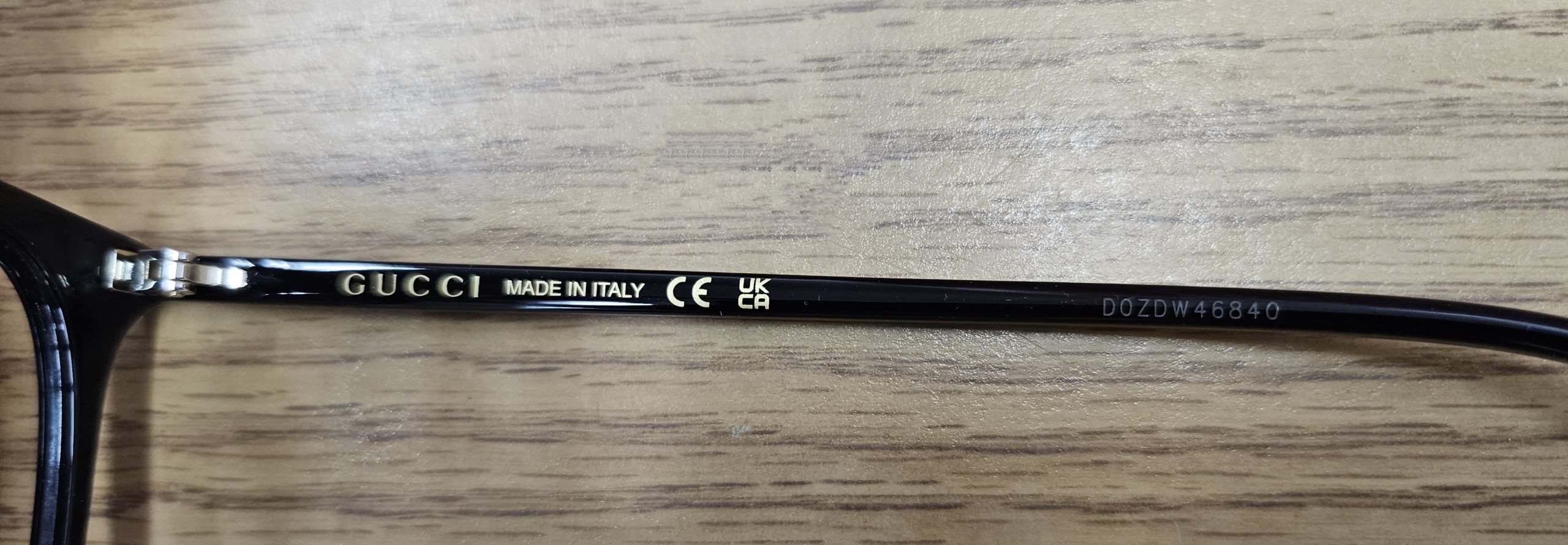
Designer eyewear contains multiple brand identifiers beyond the main logo. Authentic Oakley frames feature raised "O" icons on temple tips and nose pads. Versace glasses display the Medusa head emblem on temple ends with crisp definition.
Common brand marking locations:
- Temple arm interiors (brand name, country of origin)
- Nose pad arms (miniature logos)
- Lens corners (etched brand initials)
- Temple tip ends (embossed symbols)
- Bridge underside (model collection name)
Verifying Lens Authenticity
Lens quality serves as a critical indicator when determining authentic eyewear from counterfeit versions. Professional verification methods reveal distinct differences in optical performance and protective features between genuine and fake glasses.
UV Protection Testing
Authentic eyewear lenses block 99-100% of UVA and UVB rays according to industry standards. Optical shops use UV meters to measure lens protection levels by placing glasses between the device and a UV light source. The meter displays protection percentages immediately.
Counterfeit lenses typically show readings below 95% UV protection. Some fake glasses block only 10-30% of harmful rays despite labels claiming full protection. Home testing involves using a UV flashlight and currency with security features - authentic lenses prevent the security markings from glowing under UV light.
Professional opticians perform comprehensive UV testing using spectrophotometers that measure wavelength absorption between 280 and 400 nanometers. These devices cost $500-2,000 and provide precise protection data within seconds.
Optical Clarity Assessment
Genuine lenses maintain consistent clarity across the entire surface without distortions. Opticians use lensometers to measure optical power and detect irregularities in prescription accuracy. Authentic non-prescription lenses show zero power readings across all meridians.
Testing optical clarity involves viewing grid patterns through the lenses at arm's length. Straight lines remain straight through quality lenses while counterfeit versions cause wavy distortions or blurred areas. Digital screens viewed through authentic lenses appear sharp without color fringing.
Fake glasses often exhibit:
- Distorted text when reading through lenses
- Blurred peripheral vision areas
- Inconsistent magnification across the lens surface
- Rainbow effects around bright lights
Professional clarity tests include resolution charts placed 20 feet away. Authentic lenses allow users to read 20/20 lines clearly while counterfeits reduce visual acuity by 10-40%.
Coating Quality Checks
Premium eyewear features multi-layer coatings applied through vacuum deposition processes. Anti-reflective coatings on authentic lenses display subtle green or purple hues when viewed at specific angles under fluorescent lighting. These coatings reduce glare by 99.5% compared to uncoated lenses.
Water droplet tests reveal coating quality differences instantly. Authentic hydrophobic coatings cause water to bead and roll off within 1-2 seconds. Counterfeit coatings allow water to spread and stick to lens surfaces.
Authentic anti-fog coatings prevent condensation for 30-60 seconds when breathing on lenses. Fake coatings fog immediately and remain clouded for 5-10 seconds. Professional coating thickness gauges measure authentic coatings at 1-3 micrometers while counterfeit versions register 0.1-0.5 micrometers.
Packaging and Documentation Red Flags
Authentic designer glasses arrive with premium packaging and comprehensive documentation that counterfeiters rarely replicate accurately. Professional manufacturers invest heavily in presentation materials that reflect their brand's quality standards and protect their products during shipping.
Missing or Poor Quality Cases
Genuine designer eyewear includes sturdy cases made from leather, hard plastic, or microfiber materials with precise stitching and brand embossing. Counterfeit glasses often come in flimsy cases featuring uneven seams, misspelled brand names, or generic designs without logo placement. Authentic cases display consistent coloring that matches official brand palettes, while fake versions show color variations or fading after minimal use.
The interior lining of genuine cases contains soft microfiber or velvet material that protects lenses from scratches. Fake cases typically use cheap felt or thin fabric that deteriorates quickly. Brand logos on authentic cases appear through embossing, metal plaques, or high-quality printing that maintains clarity over time. Counterfeit cases display blurry logos, incorrect fonts, or adhesive stickers that peel off easily.
Absent Authentication Cards
Designer eyewear manufacturers include authentication cards containing serial numbers, QR codes, or holographic elements that verify product legitimacy. These cards match the serial numbers engraved on the frames and connect to the manufacturer's database for verification. Counterfeit glasses lack these cards entirely or include poorly printed versions without functional verification systems.
Authentic authentication cards feature:
- Unique serial numbers matching frame engravings
- Holographic security features that change appearance when tilted
- QR codes linking to official brand websites
- High-quality cardstock with precise printing
Fake authentication cards display generic information without specific product details or contain non-functional QR codes that lead to error pages. The cardstock feels thin, and the printing appears pixelated or smudged compared to genuine documentation.
Incorrect Product Information
Genuine eyewear packaging displays accurate model names, color codes, and sizing information that matches official brand catalogs. Counterfeit packaging frequently contains spelling errors, incorrect model numbers, or sizing measurements that don't align with actual frame dimensions. For example, authentic Ray-Ban Wayfarers list specific codes like "RB2140 901 54-18" while fakes might show generic labels like "Wayfarer Style Black."
Product information discrepancies include:
- Model numbers that don't exist in official catalogs
- Color descriptions that don't match the actual frames
- Sizing measurements off by 2-5mm from standard specifications
- Country of origin listings that contradict brand manufacturing locations
Authentic packaging includes detailed care instructions printed in multiple languages with consistent grammar and formatting. Counterfeit versions contain poorly translated text, missing languages, or care instructions that recommend inappropriate cleaning methods for lens materials.
Tips for returning fake eyeglasses
If the eyeglasses you received don’t match your prescription or the quality you expected, you can try to contact the company you purchased them from. However, if you truly received a fake or counterfeit pair of glasses, you may have difficulty returning them and getting a refund.
Overnight Glasses specializes in affordable pairs of eyeglasses delivered quickly, so if you are in need of an immediate replacement for your eyeglasses, see what Overnight Glasses has to offer. Overnight Glasses can also create replacement lenses that will fit your existing frames if you just want to have a more effective lens than what is already there.
Conclusion
Spotting fake glasses requires attention to detail and knowledge of what makes authentic eyewear unique. Armed with these identification techniques, consumers can confidently navigate the eyewear market and protect their investment.
Remember that genuine designer glasses aren't just fashion statements—they're precision-crafted tools designed to protect vision and enhance daily life. The extra effort spent verifying authenticity pays off through superior eye protection and lasting quality.
When doubt arises about a pair's authenticity, it's best to walk away. Purchasing from authorized retailers might cost more initially but it guarantees genuine products with valid warranties and proper UV protection.
Taking time to verify eyewear authenticity protects both wallets and eye health. With counterfeit glasses flooding the market, these verification skills have become essential for any savvy eyewear shopper.
Frequently Asked Questions
Check for poor build quality like rough edges, loose hinges, and uneven paint. Examine the logo placement for inconsistencies in font, color, or positioning. Verify serial numbers match the manufacturer's format and location. Authentic glasses have smooth hinges, precise engravings, and multiple brand markings. If the price seems too good to be true (70-90% below retail), they're likely counterfeit.
Yes, counterfeit glasses can harm your eyes. They often lack proper UV protection, blocking far less than the 99-100% UVA/UVB rays that authentic lenses provide. The inferior materials and poor optical clarity can cause eye strain, headaches, and long-term damage from UV exposure. Always verify lens quality through professional testing or purchase from authorized retailers.
Counterfeit packaging often features flimsy cases with poor stitching and unclear brand embossing. Look for spelling errors, incorrect model numbers, or missing documentation. Authentic glasses include sturdy cases, authentication cards with unique serial numbers, warranty information, and care instructions. The packaging quality should match the premium nature of designer eyewear.
While professional UV meters provide accurate results, you can perform basic tests at home. Place the glasses between a UV flashlight and UV-sensitive items like certain plastics or currency. Authentic lenses should block the UV reaction. However, for reliable results, visit an optician who can test UV protection levels with proper equipment.